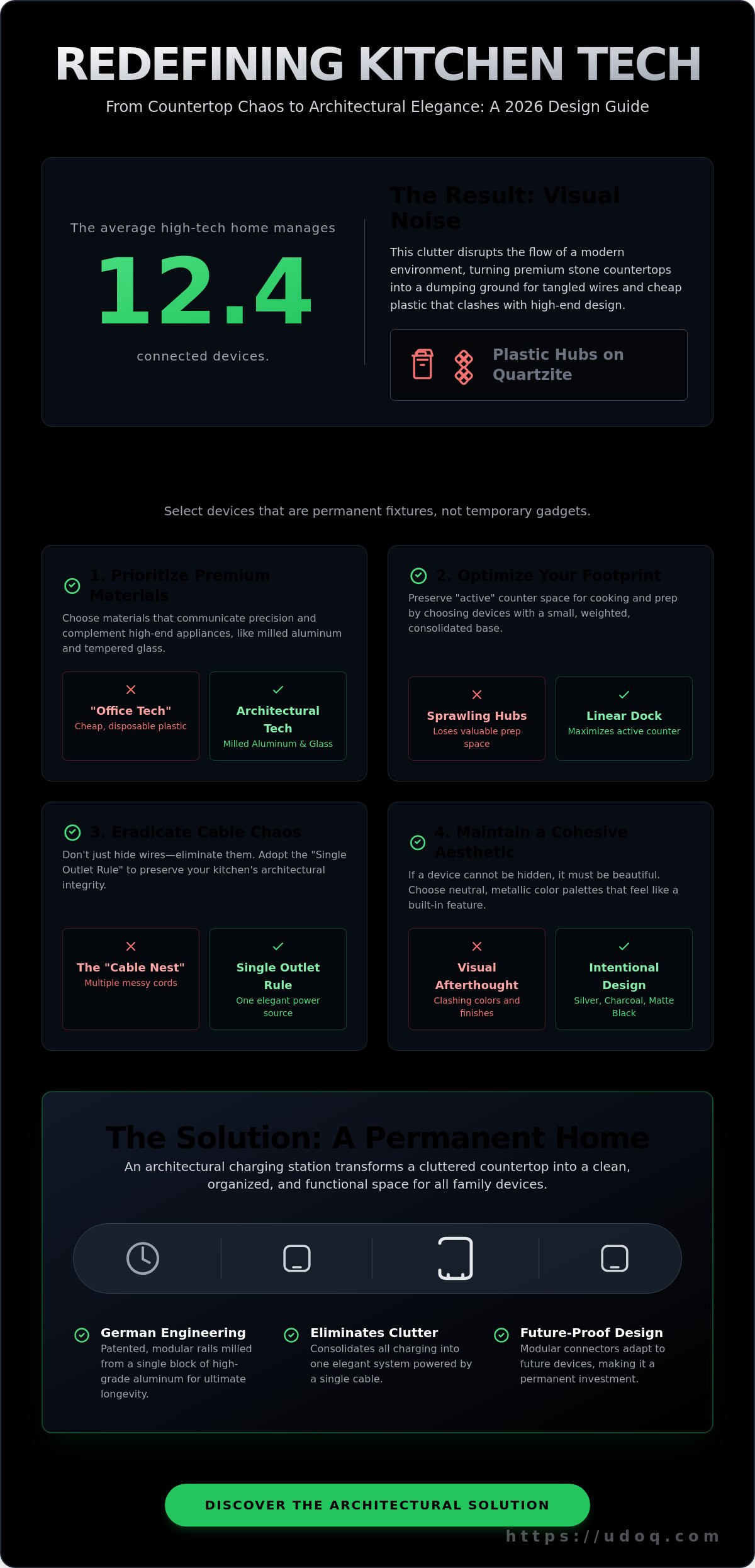
The average high-tech household now manages 12.4 connected devices. It's a staggering figure that often translates into a tangled web of white plastic cables snaking across your premium natural stone. Finding tech that looks good on a kitchen counter shouldn't feel like a compromise between modern utility and high-end industrial design. You've invested in dramatic quartzite and bespoke cabinetry; the visual noise of "cheap" charging blocks doesn't belong in a professional-grade environment.
We understand the frustration of losing valuable prep space to a chaotic pile of phones and tablets. This 2026 design guide promises to help you integrate essential technology without sacrificing your minimalist aesthetic. You'll learn how to create a permanent, high-quality home for family devices that feels like an architectural extension of your kitchen. We'll explore the latest in invisible integration, modular aluminum rails, and smart appliances that prioritize order as much as performance.
Key Takeaways
- Define hardware by its design language. Learn to select devices that follow minimalist principles to eliminate the visual noise of traditional plastic gadgets.
- Prioritize premium materials. Discover why milled aluminum and glass are the gold standards for tech that looks good on a kitchen counter.
- Optimize your footprint. Master the art of maximizing active counter space while maintaining seamless access to smart hubs and digital recipe books.
- Eradicate cable chaos. Understand the critical difference between hiding tangled wires and eliminating them entirely through architectural charging solutions.
- Invest in longevity. Explore how patented, German-engineered rails like the udoq 250 transform device charging into a high-end design statement.
The Aesthetic Kitchen: Why Traditional Tech Fails the Countertop Test
Modern kitchens aren't just for cooking; they're the primary command centers of the home. Most consumer electronics are designed for office desks or bedroom nightstands, meaning they fail the kitchen test immediately. Aesthetic kitchen tech is hardware that adheres to strict minimalist design principles. It prioritizes clean lines, premium materials, and a quiet visual presence. When you invest in a professional-grade kitchen, every object on the surface should contribute to the room's architectural intent.
Visual noise is the psychological weight of physical clutter. With the average high-tech home managing 12.4 connected devices, the kitchen often becomes a dumping ground for tangled white plastic. This chaos disrupts the flow of a modern environment. Research from the National Kitchen & Bath Association shows that 62% of designers now prioritize natural quartzite for countertops. These premium stone surfaces deserve accessories that respect their quality. Good Industrial design principles dictate that a product's form must harmonize with its surroundings, especially in high-traffic areas where culinary creativity requires a clear mind.
To better understand how to select high-quality gadgets for your space, watch this helpful video:
The Problem with "Office Tech" in the Kitchen
Most charging hubs use cheap plastic finishes that clash violently with quartz, marble, and granite. They aren't built for the kitchen's unique environment. The "Cable Nest" phenomenon is a common frustration; one phone charger inevitably leads to five. Standard multi-port hubs are an eyesore on a clean island. They create a messy, temporary feel in a room designed for permanence and luxury. It's time to stop treating your kitchen counter like a corporate cubicle.
Defining the 2026 Kitchen Tech Aesthetic
In 2026, minimalism is a functional choice, not just a look. The trend has shifted toward "Architectural Tech" that mimics high-end hardware finishes like brushed steel or milled aluminum. This is the only tech that looks good on a kitchen counter because it feels like a built-in feature rather than an afterthought. Prioritize long-term durability over disposable electronics. Explore premium charging stations that offer a modular, permanent home for your devices while maintaining the psychological relief of a tidy, organized environment.
Design Principles for Choosing Tech That Complements Your Counter
Choosing tech that looks good on a kitchen counter requires a shift in perspective. You aren't just buying a gadget; you're selecting a permanent fixture. Materiality is the foundation of this choice. Milled aluminum and tempered glass are the gold standards for 2026. These materials don't just look premium; they communicate a sense of technical precision that complements high-end appliances rather than competing with them.
Color palettes should remain neutral to maintain a sophisticated atmosphere. Use metallics like silver, charcoal, or matte black to bridge the visual gap between your backsplash and your appliances. This creates a cohesive flow that feels intentional. According to the latest kitchen design trends, smart kitchens are moving toward concealment and integration. If a device cannot be hidden, it must be beautiful enough to be showcased as part of the room's industrial design.
Footprint optimization is about more than just dimensions. It's about preserving "active" counter space for actual cooking. A device with a small, weighted base is always superior to a sprawling plastic dock. Adopting the "Single Outlet" Rule is the most effective way to identify tech that looks good on a kitchen counter. By reducing your technology to a single power source, you eliminate the visual friction of multiple cords. A single, elegant cable path preserves the architectural integrity of your kitchen island or breakfast nook.
Material Harmony: Aluminum vs. Plastic
Aluminum tech matches the finish of your high-end faucets and cabinet hardware perfectly. It offers superior heat dissipation, which is critical in high-traffic cooking zones where ambient temperatures can fluctuate. Unlike lightweight plastic, weighted aluminum tech stays exactly where you place it on stone surfaces. It doesn't slide when you dock a tablet or pull a cable. This stability provides the psychological relief of a controlled, tidy environment.
The Importance of Modular Design
Fixed docks are a short-term investment. They fail the moment you upgrade your phone or tablet to a new model. Modular design is the secret to long-term viability in the kitchen. It allows you to swap connectors as industry standards evolve without replacing the entire unit. Your setup should move effortlessly from a solo recipe station to a multi-device family charging hub. This adaptability is a signature of high-quality craftsmanship. To achieve this level of organization, consider a modular charging system that evolves with your lifestyle.
Essential Categories of High-End Kitchen Technology
High-end technology should be felt, not just seen. In 2026, the best tech that looks good on a kitchen counter functions as a curated design element. Smart home hubs are no longer clunky, plastic tablets. They're now high-resolution displays that double as digital art or high-definition recipe books when idle. This dual-purpose design ensures your counter remains a place of beauty, even when you aren't actively cooking. It respects the architectural flow of the room.
Audio systems have undergone a similar transformation. Minimalist speakers now feature slim profiles and premium materials like acoustic fabric or brushed metal. They blend into the backsplash or sit tucked under cabinetry, providing high-fidelity sound without the bulk of traditional equipment. Lighting plays a supporting role here. Sensor-activated LED strips can highlight specific tech "zones," creating a museum-like quality for your most-used devices. This level of intentionality is what separates a professional kitchen from a standard one.
While some competitors suggest replacing your entire surface with smart countertops, this is often an unnecessary and expensive overhaul. You can achieve a superior look by selecting standalone tech that looks good on a kitchen counter. Focus on hardware that emphasizes order and quality. A central charging station is the most critical piece of this puzzle. It's often the ugliest part of a kitchen, but it doesn't have to be. It should serve as the home's operational anchor, reflecting the same craftsmanship as your bespoke cabinetry.
The Evolution of the Family Charging Hub
For years, the "junk drawer" was the graveyard of charging cables. That era is over. Modern households now move their tech onto the counter with pride. Organizing multiple tablets and phones for a busy family requires a systemic approach rather than a collection of loose wires. It's about creating a permanent home for your devices that feels like a natural extension of the kitchen. For a deeper dive into this transition, explore The Ultimate Guide to Choosing a Charging Station in 2026. This shift reduces visual friction and ensures your devices are always accessible.
Smart Displays for the Modern Chef
Placement is everything. A smart display must offer clear recipe viewing without obstructing your prep work. The best solution involves integrating these displays into a minimalist docking system. This allows for adjustable viewing angles and easy removal when you need more space. Managing power is the final hurdle. High-end setups use hidden cable runs or modular aluminum rails to ensure the display never shows a trailing cord. This meticulous attention to detail maintains the psychological relief of a tidy environment.
Eliminating Cable Chaos: The Secret to a Minimalist Countertop
Hiding cables is a temporary fix. It typically relies on plastic ties or adhesive hooks that eventually fail and leave residue on your cabinetry. Eliminating cables is a structural decision. True tech that looks good on a kitchen counter incorporates cable management into its physical build. A single-outlet system transforms your kitchen island from a cluttered workstation into a clean, architectural surface. By consolidating power, you remove the visual friction of multiple cords fighting for one socket.
This approach also serves a practical purpose. Loose cables are magnets for kitchen grease, dust, and food particles. They make deep cleaning nearly impossible. A streamlined system improves hygiene and reduces the fire risk associated with daisy-chained power strips. Modular rails represent the evolution of this concept. Unlike standard multi-port chargers that still leave wires exposed, a rail system encloses the mess entirely.
The "One Cable" Philosophy
Efficiency starts with a single power supply. Use high-quality USB-C standards to provide a universal power source for all your devices. This reduces the visual footprint of bulky adapters. Internal cable routing within a docking rail ensures that only the connector is visible. This level of technical precision is essential for maintaining a high-end aesthetic. It's about creating a unified system that values your space as much as your connectivity.
Docking vs. Messy Cables: A Practical Comparison
Compare a standard "nest" of chargers to a linear docking system. The nest is chaotic and difficult to manage. A linear dock provides a permanent, organized home for every device in the house. This setup is significantly easier to clean. You can wipe down your stone surfaces without moving a dozen individual wires. Longevity is another factor. High-quality connectors like the L-CABLE are built to withstand daily use. They outlast cheap, disposable alternatives that fray and fail within months. Invest in a system that prioritizes material durability.
Ready to reclaim your surfaces? Explore our range of architectural charging rails to eliminate cable chaos forever.
udoq: The Architectural Charging Solution for Your Kitchen
Choosing the right hardware is the final step in curating your aesthetic kitchen. The udoq 250 offers a compact, 250mm footprint that fits perfectly into minimalist layouts. It represents the pinnacle of tech that looks good on a kitchen counter because it prioritizes material integrity over disposable plastic. Every rail is crafted from high-grade, milled aluminum, reflecting a German manufacturing heritage that values longevity and technical precision. It isn't a temporary accessory; it's a permanent investment in your environment.
Customization is the core of the udoq system. You can slide and swap connectors to accommodate any device, from the latest smartphones to e-readers. This modularity makes it the only tech that looks good on a kitchen counter while remaining fully functional for a busy household. As technology evolves, your dock evolves with it. This reduces electronic waste and ensures your kitchen remains free from the "cable nests" discussed earlier. You simply replace a single connector rather than the entire station.
The udoq 250 and 400: Sizing for Your Space
Selecting the right rail length depends on your specific counter layout and device count. The udoq 250 is ideal for tight corners or solo users. If you need to manage a larger family ecosystem, the udoq 400 Premium Watch Dock provides the extra width needed for a complete setup. For those who want to reclaim every inch of stone surface, integrate the udoq WALL MOUNT. This creates a floating tech look that keeps your devices accessible but off the counter entirely.
Future-Proofing with Modular Connectors
The transition between industry standards shouldn't render your kitchen tech obsolete. The udoq rail allows for the effortless swapping of connectors. You can move between MagSafe, USB-C, or Lightning adapters as your family upgrades their hardware. This adaptability is protected by patented mechanical innovations that ensure a secure fit every time. If you need high-capacity power, the POWER series can charge up to 10 devices from a single outlet. This fulfills the "Single Outlet" rule while maintaining a clean, organized environment. Explore udoq Charging Stations to transform your kitchen counter today.
Architectural Order for the Modern Kitchen
A sophisticated kitchen requires more than premium stone and custom cabinetry. It demands a technical setup that respects your room's design language. You now understand that material harmony and cable elimination are the essential steps to reclaiming your surfaces. Integrating tech that looks good on a kitchen counter isn't just an aesthetic choice; it's a commitment to a tidy, high-performance environment that supports your culinary creativity.
The udoq system delivers this order through patented German engineering and a high-grade milled aluminum finish. It's a modular system compatible with all brands, ensuring your investment remains relevant as industry standards shift. Stop managing a chaotic "cable nest" and start showcasing your technology with pride. Your kitchen island deserves a solution that's as durable as it is beautiful.
Shop the udoq 250 Minimalist Kitchen Dock today to finalize your 2026 design upgrade. It's time to enjoy the psychological relief of a clutter-free, professional-grade kitchen.
Frequently Asked Questions
How do I hide my charging cables on the kitchen counter?
Eliminate cables entirely by using an architectural rail system rather than temporary hiding hacks. A modular aluminum dock consolidates multiple power sources into a single outlet. This approach removes the visual noise of tangled wires and creates a permanent, organized home for your devices. It's a structural solution that values the integrity of your stone surfaces.
Is it safe to have tech and charging stations near a kitchen sink?
Maintain a safe distance of at least 24 inches from any water source to prevent splashes. For maximum safety in high-traffic zones, utilize a wall mount to create a floating tech station. This elevates your devices above potential spills and prep debris. It ensures your electronics remain accessible for recipes while staying completely clear of the "wet zone."
What is the best material for kitchen electronics to match stone countertops?
Milled aluminum is the gold standard for tech that looks good on a kitchen counter because it mirrors the finish of high-end appliances. Unlike cheap plastic, weighted aluminum stays in place on quartz or marble. It provides a technical precision that feels like a built-in feature. This material choice ensures your technology complements your kitchen's industrial design rather than clashing with it.
Can I use a docking station for both Android and Apple devices in the kitchen?
Modular docking systems allow you to slide and swap connectors to accommodate any brand or model. You can mix USB-C, Lightning, and MagSafe adapters on a single rail to support the entire family's hardware. This adaptability is critical for future-proofing your kitchen. It allows your charging setup to evolve as you upgrade your tablets and phones without needing a full replacement.
How do I organize a family charging station without it looking cluttered?
Consolidate your devices into a single, linear hub to replace the "junk drawer" mentality. A tiered docking system allows you to stack phones and tablets vertically, significantly reducing the footprint of your tech that looks good on a kitchen counter. This creates a clear visual hierarchy. It provides the psychological relief of a tidy environment while ensuring every family member has a dedicated charging spot.
What tech is essential for a modern 2026 smart kitchen?
The 2026 kitchen prioritizes integrated smart displays, high-fidelity audio, and architectural charging solutions. Focus on hardware that serves a dual purpose, such as displays that double as digital art when idle. Essential tech should enhance your culinary workflow without creating visual friction. Invest in high-quality, long-term fixtures that prioritize order, durability, and seamless device access.