What if your workspace reflected the precision of your devices rather than the chaos of their power cords? Most of us live with a constant undercurrent of visual noise from tangled wires and inefficient hubs. It ruins the aesthetics of a carefully curated home and adds unnecessary friction to your day. Investing in a high-quality universal device charging station is about more than just battery life; it's a commitment to a tidy, professional environment. The udoq German design multiple charging station for any mobile device offers a systemic solution that bridges the gap between industrial durability and minimalist elegance.
In this guide, you'll learn how to transition from temporary charging messes to a permanent infrastructure that adapts to every port standard. We'll explore the critical features to look for in 2026, compare multi-device ecosystems, and demonstrate why modularity is the only way to future-proof your workspace. Discover how to eliminate cable clutter with a station that adapts to your technology and elevates your office aesthetics. It's time to reclaim the psychological relief of a clean, organized desk.
Key Takeaways
- Learn why the best universal device charging station in 2026 must prioritize organizational efficiency alongside high-wattage power delivery.
- Identify the critical features of a premium dock, including internal cable management and the capacity to charge multiple devices from a single outlet.
- Discover how to bridge the gap between diverse device ecosystems and various mobile device types using a modular rail system that adapts to changing port standards.
- Master the "one outlet rule" to declutter your high-traffic zones and create a cohesive, minimalist workspace.
- Explore the udoq advantage: a patented, German-engineered sliding connector system designed for long-term durability and aesthetic elegance.
What Defines the Best Universal Device Charging Station in 2026?
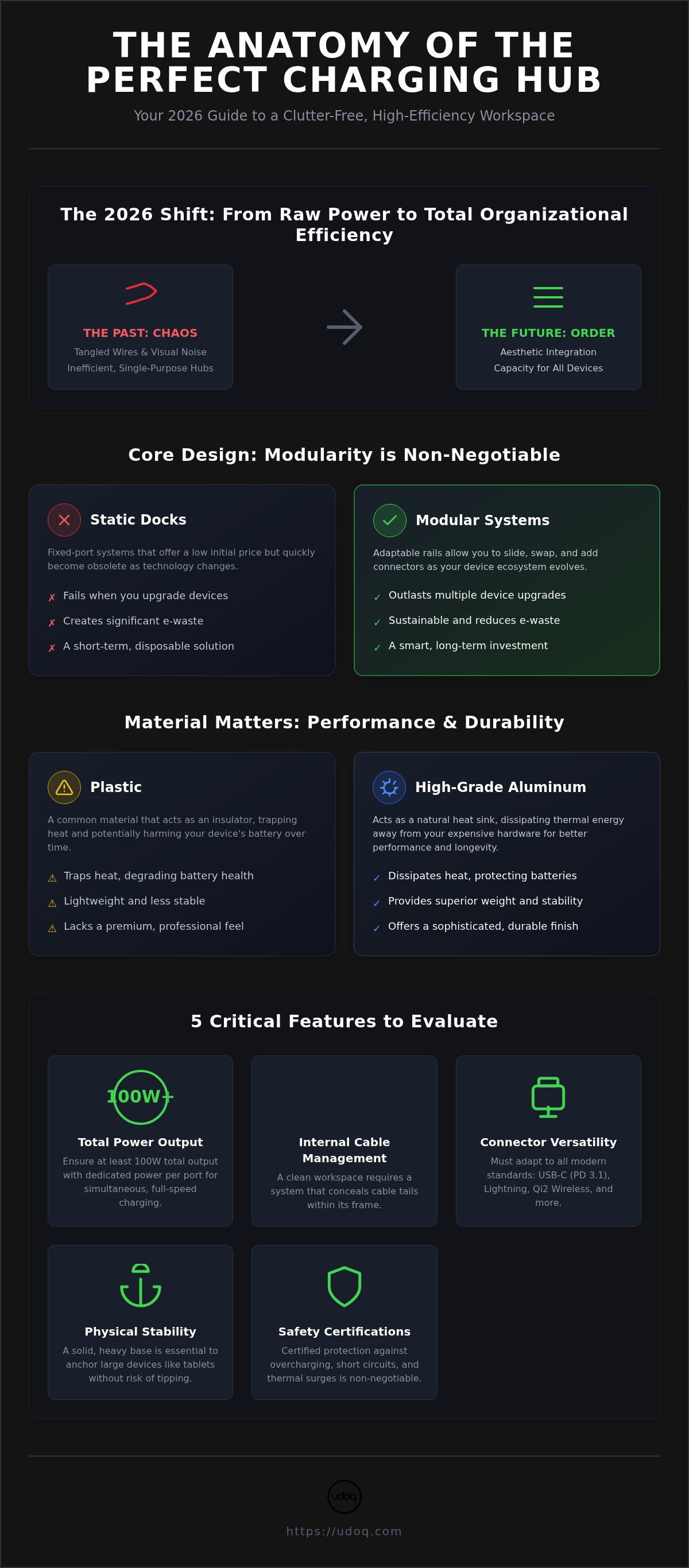
In 2026, a universal device charging station is no longer a luxury accessory. It is essential infrastructure for the modern home. The definition of "best" has shifted away from raw power delivery toward total organizational efficiency. While older hubs focused solely on speed, premium solutions now balance rapid charging with aesthetic integration and device capacity. You don't just need power; you need a system that removes the cognitive load of a cluttered desk. A high-end station functions as a central anchor for your digital life, keeping up to 10 devices organized and accessible while they recover energy.
Current standards demand versatility. With the EU mandate requiring USB-C for nearly all portable electronics as of late 2024 and laptops by April 2026, your station must support high-wattage Power Delivery (PD 3.1). Simultaneously, the rise of Qi2 wireless charging has set a new benchmark for efficiency and magnetic alignment. Understanding the history of universal chargers reveals a clear trajectory toward this unified future. A permanent docking solution must handle these evolving standards without becoming a graveyard of obsolete cables. It's the difference between a temporary travel charger and a permanent piece of office furniture.
Static vs. Modular Design
Most consumers start with static docks. These are fixed units with set ports. They offer a lower initial price point but fail as soon as you upgrade your phone or tablet. They are disposable tech. In contrast, a modular system uses adaptable rails. You can slide, swap, and add connectors like the C-CABLE or L-CABLE as your ecosystem changes. This modularity isn't just convenient; it's sustainable. By replacing a single connector instead of the entire station, you significantly reduce e-waste and protect your long-term investment. It's a system designed to outlast your next three smartphone upgrades.
Material Quality: Aluminum vs. Plastic
Material choice directly impacts performance. Plastic is an insulator that traps heat. In high-wattage environments, excessive heat degrades your device's battery health over time. High-grade aluminum acts as a natural heat sink, dissipating thermal energy away from your expensive hardware. Beyond technical specs, the tactile experience matters. A solid metal station provides a professional weight and finish that plastic cannot replicate. You can explore our collections of charging stations to see how industrial-grade materials transform a simple utility into a sophisticated design statement. Premium materials reflect a professional workspace and a commitment to quality that plastic simply can't match.
5 Critical Features to Evaluate Before Buying
Selecting a universal device charging station requires looking beyond the number of ports. Total power output is the primary metric for performance. It determines if your station can actually charge an iPad Pro and a smartphone simultaneously at full speed. Many cheap hubs share power across all ports. This leads to frustratingly slow charging times when multiple devices are connected. A professional-grade station ensures consistent energy flow regardless of the load. It provides the necessary headroom to keep your entire digital ecosystem operational.
True organization means hiding the chaos of tangled wires. Look for a station that conceals cable tails within its frame to maintain a clean workspace. It should support a diverse range of connectors, including USB-C, Lightning, and magnetic adapters. As you cycle through older tech and upgrade to newer standards, your station must remain adaptable. This approach encourages responsible e-waste recycling by extending the life of your charging hardware instead of forcing a full replacement every few years. Modularity is the key to longevity.
Stability is a mechanical necessity. A high-end station possesses the physical weight to anchor an iPad Pro or a large tablet without the risk of tipping. If the base is too light, the entire setup becomes precarious. Safety is the final, non-negotiable pillar. Ensure the station includes certified protection against overcharging, short circuits, and thermal surges. Premium engineering prevents fire risks and protects the sensitive batteries inside your expensive electronics. It's a long-term investment in your home's safety and your devices' health.
Understanding Wattage and Power Delivery (PD)
A tech-heavy household in 2026 needs at least 100W of total output to remain efficient. High-wattage Power Delivery (PD) is the current standard for fast-charging modern electronics. Dedicated port power is superior to shared power because it guarantees a specific wattage to each device. For a deeper dive into the technical standards, read The Ultimate Guide to USB-C. This ensures your hardware remains ready for use at a moment's notice.
Aesthetics and Industrial Design
Your charging hub shouldn't look like a piece of plastic peripheral equipment. It should complement your minimalist desk setup. German engineering excels here, providing a zero-cable look that feels integrated into your architecture. Modular docking represents the intersection of furniture and technology. It transforms a functional necessity into a design centerpiece. You can explore our modular systems to see how refined design creates a sense of psychological relief in your workspace.
Comparing Ecosystems: Apple, Android, and Multi-Device Homes
Modern households are rarely brand-monolithic. You likely manage an iPad, a Samsung work phone, and perhaps a Kindle or a pair of Sony headphones. Most premium docks fail this reality. They cater exclusively to the Apple ecosystem, leaving non-iOS devices to clutter the counter with loose cables. A truly universal device charging station must bridge these brand divides effortlessly. It should accommodate the shift from Lightning to USB-C without requiring you to replace the entire unit. This flexibility is what separates a long-term organizational tool from a temporary accessory.
Apple's transition to USB-C has left many users with a mix of legacy and modern hardware. Static docks can't solve this problem. You shouldn't have to choose between charging your older AirPods and your new iPhone 16. A modular system allows you to host both connectors on a single rail simultaneously. This adaptability is crucial when you consider a lab-tested review of the best charging stations, which often highlights the frustration of ecosystem lock-in. A sophisticated station evolves with your tech choices instead of dictating them.
Physical compatibility is another common pain point. Rugged cases and battery packs often make devices too thick for standard docking slots. A well-engineered solution uses adjustable connector heights and sliding rails to ensure a secure fit for any device, regardless of its protective shell. This eliminates the need to remove cases every time you need a charge. It's a small detail that provides significant daily relief.
The Multi-Device Challenge
Managing a fleet of phones, tablets, and smartwatches in one location often leads to "cable creep." Vertical docking is the most efficient remedy. By standing devices upright, you save 70% more desk space than using flat wireless pads. This keeps your workspace clear and your screens visible for notifications. For those deeply embedded in the iOS world, exploring The Best iPhone Charger Solutions for 2026 provides tailored insights, but the ultimate goal remains universal utility for the entire home.
Future-Proofing Your Purchase
The 2026 charging landscape is defined by Qi2 and magnetic standards. These technologies offer faster speeds and better alignment for both Android and iPhone users. However, wired connections remain the gold standard for reliability and maximum power delivery. Modular connectors like the L-CABLE and C-CABLE ensure your station stays relevant as industry standards continue to shift. You simply swap the cable, not the dock. This adaptability is the hallmark of a professional investment in your environment.
How to Create a Minimalist Charging Hub
Designing a minimalist charging hub begins with a strategic assessment of your environment. Identify the high-traffic zones where devices naturally accumulate. The kitchen island, entryway console, or home office desk are the most common culprits of cable chaos. A universal device charging station shouldn't just provide power. It must provide order. By centralizing your tech in these specific locations, you prevent devices from scattering across every available surface in your home.
The "One Outlet Rule" is the foundation of a tidy workspace. A professional docking system should power up to 10 devices from a single wall plug. This eliminates the "octopus" of power strips and extension cords typically hidden behind furniture. Beyond the aesthetic upgrade, this centralization allows you to implement a consistent charging routine. Placing your devices in the dock as the final act of your evening ensures your entire ecosystem is ready for use by morning. It creates a clear psychological boundary between digital activity and rest.
Cable Management Strategies
Most guides ignore the secondary mess created by the charging station itself. A premium system hides internal wiring within its structural frame. The udoq aluminum rail serves as a concealed conduit, hiding the tail of each cable from view. This fixed docking approach eliminates cable drag and prevents the frayed connectors caused by constant manual plugging. It transforms your hardware from a pile of wires into a structured, gallery-like display. For more tips on optimizing your environment, see our guide on how to create a minimalist desk setup.
Wall Mounting for Maximum Efficiency
Sometimes the best desk setup is no desk at all. Moving your charging hub to the wall clears horizontal surface space entirely. Use a WALL MOUNT to position your devices at eye level in shared family zones or narrow hallways. Installation at a height of 100 to 120 cm is ideal for visibility and quick access. This floating appearance reinforces a professional aesthetic and keeps expensive electronics away from spills or cluttered counters. You can shop our modular wall solutions to reclaim your desk surfaces and elevate your home's organization today.
The udoq Advantage: Why Modularity Wins
The udoq German design multiple charging station for any mobile device represents a fundamental shift in how we power our lives. While standard hubs treat charging as a secondary thought, this patented system views it as essential furniture-grade infrastructure. It replaces the cycle of disposable plastic with a high-grade aluminum rail that anchors your digital ecosystem in one place. By moving away from fixed-port docks, you gain a universal device charging station that stays functional regardless of which phone or tablet you purchase next. It is a systemic solution designed for those who value order and precision above all else.
The mechanical heart of this system is the patented sliding connector rail. This innovation allows you to adjust the layout of your dock instantly to fit any device width or protective case thickness. The POWER series takes this further by integrating high-performance charging components directly into the aluminum frame. This removes the need for external power bricks and keeps your workspace visually quiet. This level of technical precision is the result of a deep German engineering and manufacturing heritage that prioritizes material durability and long-term viability over temporary consumer trends.
Customizing Your Setup
Personalization is built into the architecture of the product. You can choose rail lengths from the compact udoq 250 for bedside use to the professional udoq 700 for busy family hubs or offices. For a specialized focus on wearables, the udoq 400 Premium Watch provides a dedicated space for your tech. You can further enhance your system with a MAGNETIC ADAPTER or WIRELESS ADAPTER to create a hybrid charging environment. This flexibility ensures that your station evolves with your needs rather than becoming a static relic on your desk.
A Long-Term Investment in Order
The financial logic of modularity is undeniable. Instead of buying a new charging hub every two years to keep up with port changes, you simply update your connectors. Swapping a C-CABLE or L-CABLE costs a fraction of a new unit and prevents functional obsolescence. This approach provides more than just technical utility; it offers the psychological relief of a permanent, orderly home for your technology. It is a commitment to quality that pays dividends in both workspace aesthetics and device longevity. We invite you to explore our full range of modular charging stations and finally reclaim the professional integrity of your desk.
Elevate Your Workspace Standards
Managing a modern tech ecosystem requires more than just a power source. It demands a system that respects your time and your environment. You've seen how a truly universal device charging station must offer modularity to survive shifting industry standards. It should bridge the gap between diverse brands while maintaining a clean, zero-cable aesthetic. By choosing high-grade aluminum and patented German engineering, you protect your hardware and your peace of mind. A clutter-free desk isn't just about looks; it's about the psychological relief of order.
The transition to a minimalist hub is a long-term investment in your daily productivity. Our system allows you to power up to 10 devices from 1 outlet, all within a sleek profile that complements any professional setting. Don't settle for disposable plastic hubs that become obsolete with your next phone upgrade. It's time to reclaim your space with a solution that evolves alongside your technology. Build Your Custom udoq Modular Charging Station and experience the clarity of a professional, organized environment today. You deserve a workspace that works as hard as you do.
Frequently Asked Questions
What is the best universal device charging station for multiple devices in 2026?
The best universal device charging station in 2026 is a modular rail system that adapts to your hardware ecosystem. Unlike fixed plastic hubs, a modular dock allows you to swap connectors as port standards evolve. The udoq German design multiple charging station for any mobile device provides this flexibility through high-grade aluminum rails and sliding connectors. It offers a professional solution that balances high-speed power delivery with a clutter-free minimalist aesthetic.
Do charging stations damage phone batteries over time?
Quality charging stations protect battery health through efficient heat management. Aluminum construction acts as a natural heat sink, dissipating thermal energy away from your device. Cheap plastic chargers trap heat, which is the primary cause of battery degradation. The udoq German design multiple charging station for any mobile device also includes certified protection against overcharging. This ensures your devices remain healthy and safe throughout their lifespan.
Can I use a charging station with a thick protective phone case?
Yes, adjustable connectors allow you to charge devices without removing thick protective cases. The sliding system in the udoq German design multiple charging station for any mobile device accommodates various device widths and case depths. You simply adjust the connector height to ensure a secure fit. It eliminates the daily frustration of stripping cases just to get a charge.
What is the difference between a charging dock and a charging station?
A dock is typically a simple, single-device accessory, while a station is a multi-device infrastructure. Stations are designed to centralize your entire digital ecosystem in one location. The udoq German design multiple charging station for any mobile device functions as a permanent hub that hides cable tails and organizes up to 10 devices. It is a piece of workspace furniture rather than a temporary peripheral.
Are wireless charging stations better than wired ones?
Wired charging is generally superior for speed and reliability, though wireless offers convenience for quick top-ups. Wired USB-C Power Delivery provides the high wattage needed for tablets and laptops. Wireless Qi2 is efficient but slower. A hybrid approach using the udoq German design multiple charging station for any mobile device offers the best performance by combining wired rails with wireless adapters. This creates a truly universal device charging station for any environment.
How many devices can one udoq charging station handle?
A single rail can handle up to 10 devices depending on the length you select. Models like the udoq 700 provide ample space for large families or busy offices. Every device draws power from one outlet, keeping your environment tidy. The udoq German design multiple charging station for any mobile device ensures that even a full rail of hardware remains organized and accessible.
What wattage do I need for a multi-device charging station?
You need at least 100W of total power for a multi-device setup to maintain fast charging speeds. This wattage ensures that tablets and smartphones don't compete for energy. The udoq German design multiple charging station for any mobile device provides dedicated energy flow to prevent the slow-charging issues common in cheap hubs. It keeps your hardware ready for use at all times.
Are modular charging stations worth the extra cost?
Modular stations are worth the investment because they evolve with your technology. You don't have to replace the whole unit when port standards change; you just update the cable. This makes the udoq German design multiple charging station for any mobile device a more sustainable and cost-effective choice over several years. It is a long-term commitment to an orderly, high-status workspace.