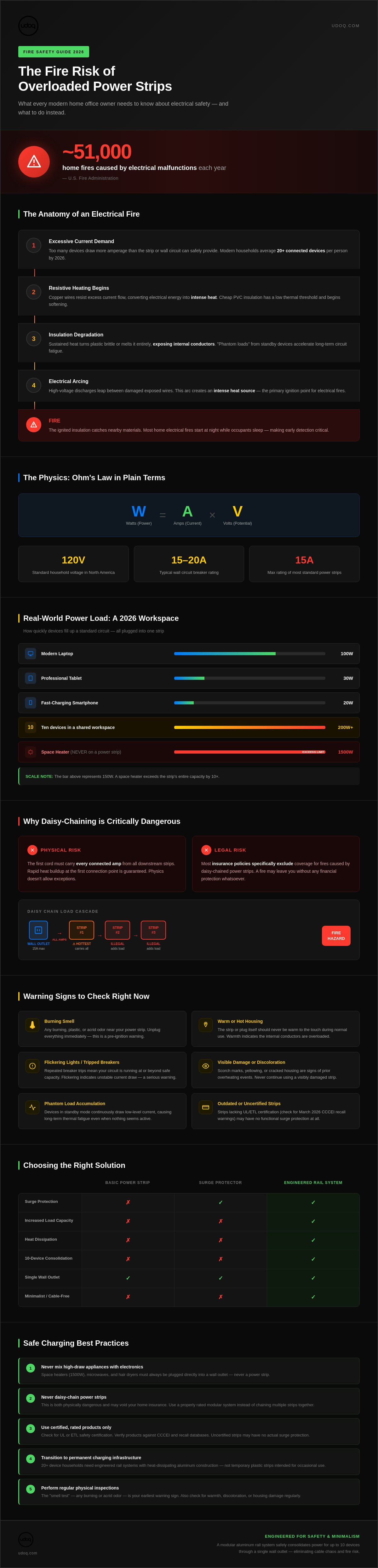
Nearly 51,000 home fires are caused by electrical malfunctions each year. This statistic from the U.S. Fire Administration highlights a silent danger lurking behind your desk. The fire risk of overloaded power strips is a growing concern as modern home offices demand more power than traditional infrastructure can provide. You likely feel the frustration of a cluttered workspace and the nagging anxiety of a daisy-chained power setup. It's a common compromise in homes where tech density has outpaced safety.
We understand the desire for an environment that's both beautiful and secure. This guide will teach you how to identify critical load limits and transition to a safer, engineered charging ecosystem. We'll preview the latest 2026 safety standards, discuss the impact of recent product recalls like the March 2026 CCCEI warning, and show you how to move from hazardous plastic strips to a professional, minimalist solution. Your environment should provide psychological relief, not a fire hazard. It's time to invest in a system that respects your safety and your space.
Key Takeaways
- Identify the hidden fire risk of overloaded power strips by understanding the thermal limits of standard PVC-jacketed cables.
- Master the "smell test" and other visual cues to detect failing electrical components before they ignite.
- Learn why modern households with 20+ devices require a shift from temporary utility strips to permanent charging infrastructure.
- Explore how a patented, modular rail system can safely consolidate power for ten devices through a single wall outlet.
- Reduce environmental chaos and anxiety by replacing cluttered cable nests with sleek, heat-dissipating aluminum components.
Understanding the Fire Risks of Overloaded Power Strips
A Power strip serves as a temporary bridge, yet many treat it as a permanent fixture. Overloading happens when you demand more amperage than the device or the wall circuit can safely provide. By 2026, households have reached a tipping point, averaging 20 connected devices per person. From wearable tech to high-performance workstations, the cumulative draw is immense. The fire risk of overloaded power strips is no longer a rare occurrence; it's a byproduct of our dense digital lives.
To better understand the physical dangers of these common devices, watch this helpful analysis:
Statistics from the Electrical Safety Foundation International (ESFI) confirm that improper cord and strip use causes thousands of residential fires every year. This danger is compounded by a lack of technical clarity. Users often fail to distinguish between a basic power tap and a true surge protector. While a surge protector offers some defense against voltage spikes, it doesn't increase the total load capacity of your wall outlet. Plugging a high-wattage appliance into a low-grade plastic strip is a recipe for failure. The fire risk of overloaded power strips increases exponentially when we ignore these technical limits.
The Anatomy of an Electrical Fire
Resistive heating is the silent precursor to disaster. When excessive current flows through a copper wire, the metal resists the flow, generating intense heat. Over time, this sustained temperature degrades the plastic insulation, turning it brittle or liquid. This exposes the internal conductors. Arcing is a high-voltage discharge that leaps between these damaged wires, creating an intense heat source that serves as a primary cause of ignition.
Why "Daisy-Chaining" is a Critical Violation
The practice of "daisy-chaining" involves plugging one power strip into another to extend reach. This creates a dangerous cumulative load on the primary wall outlet. Physics dictates that while the devices are technically in parallel, the strips are connected in a series that forces the first cord to handle every connected amp. This leads to rapid heat buildup at the first connection point. Beyond the physical danger, this is a legal risk. Most insurance policies specifically exclude coverage for fires caused by daisy-chained strips. Use a professional, modular system like those found in our charging stations collection to ensure your home remains both organized and safe.
The Science of Overloading: Why Power Strips Fail
Understanding the fire risk of overloaded power strips requires a basic grasp of Ohm’s Law. Power (Watts) equals Current (Amps) multiplied by Potential (Volts). Most household circuits in North America operate at 120V and are protected by 15A or 20A breakers. A standard power strip is often rated for a maximum of 15A. If you exceed this limit, the copper conductors inside begin to overheat. It is a physical certainty. When the demand for current outpaces the wire's ability to carry it, the excess energy is released as heat.
Cheap, mass-produced strips utilize thin, PVC-jacketed cables. These plastic housings have surprisingly low thermal thresholds. When current exceeds the wire's gauge capacity, the insulation softens and eventually melts. This isn't always an immediate failure. "Phantom loads" from devices in standby mode contribute to long-term circuit fatigue. This constant, low-level heat gradually compromises the integrity of the internal copper. High-quality charging solutions use thicker, high-gauge wiring to dissipate this heat more effectively, ensuring long-term viability. For a more permanent, heat-safe alternative, explore our engineered charging stations designed with durable, heat-dissipating materials.
Amperage vs. Voltage: The Modern Device Mix
A single modern laptop can draw 100W. Add a professional tablet (30W) and a fast-charging smartphone (20W). In a shared 2026 workspace, ten such devices quickly exceed 200W of constant draw. While this is lower than a 1,500W space heater, the cumulative load on a cheap plastic power strip is significant. Never mix high-draw appliances with sensitive electronics. A space heater or microwave should always have its own dedicated wall outlet. To verify your hardware's safety, look for these specific marks on the underside label:
- UL Listed: Indicates rigorous testing by Underwriters Laboratories.
- ETL Verified: Confirms compliance with established North American safety standards.
- Amperage Rating: Ensure the total draw of all connected devices stays below 80% of this rated capacity.
The Danger of Internal Wear and Tear
Mechanical stress is a hidden killer. Every time you plug or unplug a device, you apply physical pressure to the internal copper contacts. Over years of use, these metal clips lose their tension. Loose connections create high resistance. Resistance creates heat. These "hot spots" can reach ignition temperatures without ever tripping a circuit breaker. If a plug feels loose or the housing is discolored, discard the unit immediately. Power strips have a limited lifecycle; they are not designed for a decade of service. Choosing a system with high-status craftsmanship ensures your environment remains both organized and secure.
Warning Signs and Common Mistakes in Home Charging
Detecting the fire risk of overloaded power strips requires active vigilance. Your senses serve as the primary diagnostic tools for identifying a failing electrical system. Many users ignore subtle environmental changes until a circuit breaker trips or a device fails. By then, the internal damage to your home’s wiring or the power strip itself may already be significant. Sophisticated safety management begins with recognizing these four critical alerts.
The "Smell Test" is your most reliable early warning. A healthy electrical connection is odorless. If you detect a sharp, metallic scent similar to ozone, or an acrid "fishy" aroma, the plastic insulation is likely melting. This indicates that the copper wires have reached a temperature beyond their rated capacity. Visual cues are equally telling. Periodically inspect the housing of your power strip and the wall outlet itself. Any browning, warping, or black singe marks around the plug prongs are definitive signs of sustained arcing and heat damage. If you see these marks, discard the hardware immediately.
Auditory and tactile warnings provide real-time feedback on circuit health. Listen for a faint buzzing, humming, or crackling sound coming from the outlet. These sounds represent electricity struggling to cross a loose or corroded connection. From a tactile perspective, a power strip should never feel warmer than room temperature. If the plastic casing feels hot to the touch, you have exceeded the safe load limit. This heat is a precursor to ignition. Professional environments prioritize order and safety by replacing these stressed plastic components with high-status, engineered alternatives.
The "Hidden Cord" Fallacy
Tucking a power strip under a rug or behind a heavy sofa is a dangerous aesthetic compromise. Rugs act as thermal insulators. They trap the heat generated by electrical resistance, preventing the cord from cooling naturally. This creates a localized "oven" effect that can ignite floor coverings. Furniture placement also poses a mechanical threat. Heavy desks or sofas can pinch and crush cables, causing internal fractures in the copper. These fractures create high-resistance points that lead to short circuits. Maintain clear airflow around all charging components to ensure long-term viability.
Ignoring the Wall Outlet Capacity
A power strip is a distribution tool, not a power generator. It merely splits the available current from a single wall outlet. Most residential circuits are limited to 15 amps. When you connect multiple high-demand devices, you aren't just taxing the strip; you are taxing the entire circuit behind the wall. Understanding these limits is essential for a fire-safe home office. For a deeper analysis of modern power requirements, consult The Ultimate Guide to Choosing a Charging Station in 2026. Transitioning to an organized, engineered system provides the psychological relief of a tidy space without the hidden dangers of a traditional power tap.
Beyond the Power Strip: Best Practices for Safe Device Management
Power strips are designed for temporary utility, yet they often become permanent fixtures in the modern home office. Real safety requires a transition from these makeshift solutions to dedicated charging infrastructure. The fire risk of overloaded power strips is significantly mitigated when you move toward a centralized, engineered system. It is about more than just adding outlets. It is about managing energy flow with precision and intent.
Effective management begins with a power audit. Calculate the total wattage of your connected devices. Most residential breakers handle 1,800 to 2,400 watts per circuit. If your workstation shares a wall with a high-draw appliance, you are already nearing the limit. Physical protection is equally vital. Use cable management tools to prevent plugs from being bent or pulled. Tension on a power cord creates internal wire fractures, leading to localized heating. Finally, consider strategic placement. Keep all charging hubs in open areas. Placing a power source near curtains or on a carpeted surface creates a thermal trap that can turn a small malfunction into a major incident.
The Minimalist Approach to Power
A cluttered workspace creates mental friction. Centralizing your technology on a single rail reduces the need for multiple wall outlets and eliminates the "cable nest" typical of standard power strips. This "one-cable" philosophy provides the psychological relief of a tidy environment. It transforms a chaotic charging area into a professional station. For more insights on refining your workspace, read How to Create a Minimalist Desk Setup: The Ultimate 2026 Guide. A minimalist environment isn't just an aesthetic choice. It is a commitment to safety and efficiency.
Investing in Premium Materials
Material science is the foundation of electrical safety. Plastic is an insulator; it traps heat. Aluminum is a conductor; it acts as a heat sink. Choosing hardware made from high-grade anodized aluminum allows for superior heat dissipation during high-wattage charging. This is where German engineering makes the difference. A modular system allows you to swap cables as standards change, preventing the need for dangerous "adapter stacking." By choosing a system designed for longevity rather than disposable convenience, you invest in the long-term viability of your home environment. It is time to move beyond plastic utility. Upgrade to an engineered charging ecosystem that prioritizes both form and function.
The udoq Solution: Engineered Safety and Minimalist Charging
Traditional power strips are often the weakest link in your home's electrical safety. The fire risk of overloaded power strips stems from their reliance on plastic housings and fixed, often low-gauge wiring. udoq replaces this vulnerability with a German-engineered rail system. Starting with the compact udoq 250 and extending to the expansive udoq 700, these rails offer a sophisticated alternative to hazardous floor-level clutter. By consolidating power into a single, high-status charging station, you eliminate the mechanical and thermal stress placed on multiple wall outlets.
Material choice is the defining factor in long-term safety. While plastic traps heat, the udoq system utilizes a high-grade anodized aluminum rail. This material serves as a natural heat sink, dissipating thermal energy away from your device batteries and internal components. It is a solution rooted in technical precision. Our patented modular design allows you to slide and adjust connectors as needed. You can integrate USB-C, Lightning, or Wireless Adapters without ever needing to "daisy-chain" a second power source. It is an investment in your physical space and your peace of mind.
One Outlet, Ten Devices, Zero Clutter
A single udoq rail can power up to ten devices from a single wall outlet. This is achieved through an internal power distribution system that manages the load without exceeding the circuit’s rated capacity. Systems like the udoq 400 Premium Watch Dock provide a centralized hub that eliminates the need for a separate wall brick for every gadget. This centralization reduces the fire risk of overloaded power strips by removing the chaotic "cable nest" that often hides electrical hotspots. It creates a streamlined, professional environment where every device has a dedicated, secure position.
A Sustainable and Safe Investment
Longevity is the ultimate form of sustainability. Unlike disposable plastic strips that degrade over time, udoq hardware is built for permanent use. The system evolves with technology. When industry standards shift, you simply swap a C-CABLE for a new connector type. You don't need to discard the entire unit or add more strips to your floor. This adaptability ensures your charging ecosystem remains safe and efficient for years. It is time to replace your temporary utility with a permanent, engineered solution. Browse the udoq Charging Station Collection to transform your workspace today.
Transition to a Professional Charging Ecosystem
Your workspace should be a sanctuary of productivity, not a source of constant electrical anxiety. We have explored how cumulative device loads and degrading plastic insulation create silent hazards in the modern home office. True safety is a deliberate choice. It starts with recognizing physical warning signs like heat and discoloration. It ends with investing in infrastructure that respects technical limits and material science. You don't have to compromise between a high-end aesthetic and a fire-safe environment.
Mitigating the fire risk of overloaded power strips requires moving beyond cheap, temporary utility. By choosing German-engineered safety standards and a patented modular aluminum design, you protect your property from the dangers of resistive heating. This transition eliminates dangerous cable clutter while providing the psychological relief of a meticulously organized desk. Your technology deserves a foundation that is as sophisticated and durable as the devices themselves. It's time to replace chaos with order and safety.
Upgrade to a Safe, Modular udoq Charging Station
Take control of your environment today. A secure, minimalist home office is within your reach, ensuring your space remains both beautiful and protected for years to come.
Frequently Asked Questions
How do I know if my power strip is overloaded?
Physical indicators are your first warning. If the plastic housing feels hot to the touch, or if you notice a faint buzzing sound, the current draw is exceeding the strip’s capacity. Discoloration around the plug prongs or a flickering power light also signal that you are facing a significant fire risk of overloaded power strips. Periodic inspections of your hardware can prevent these technical failures before they escalate.
Is it safe to plug a phone charger into a power strip permanently?
Low-voltage chargers are generally safe for permanent connection, but they contribute to cumulative load and "vampire" power draw. Over years of use, the constant tension on internal copper contacts can lead to mechanical fatigue. For a more secure and organized environment, transition to a modular aluminum rail. This eliminates the need for multiple plastic bricks and ensures a more stable electrical connection for your high-status devices.
Can a power strip catch fire if nothing is plugged into it?
Yes, internal degradation can cause a fire even without an active load. Dust accumulation inside the housing can act as a fuel source if a short circuit occurs due to humidity or manufacturing defects. Inexpensive, low-quality strips often lack the robust internal insulation found in German-engineered systems. Always choose hardware with high-grade materials to ensure long-term viability and safety even when your devices are disconnected.
What is the maximum number of devices I can plug into one outlet?
Amperage is the true limit, not the number of physical sockets. Most residential outlets are rated for 15 amps or approximately 1,800 watts. Exceeding this total across all connected devices creates a fire risk of overloaded power strips that can ignite internal wall wiring. A professional charging station like the udoq 700 is designed to manage up to ten devices safely by distributing the load efficiently across its patented internal rail system.
Do surge protectors prevent fires caused by overloading?
Surge protectors do not prevent fires caused by excessive current draw. They are designed to block sudden voltage spikes from lightning or grid fluctuations, not to manage sustained resistive heating. If you plug high-wattage appliances into a surge protector, the internal wires will still overheat. Safety requires matching your total wattage to the circuit capacity rather than relying on a surge protector to handle an improper load.
Why does my power strip feel warm when I charge my laptop?
Warmth is a byproduct of electrical resistance in the copper wiring. Modern laptops often draw 100 watts or more, which places significant stress on thin, PVC-jacketed cables. If the strip feels uncomfortably hot, the wire gauge is likely too small for the current being demanded. High-grade aluminum rails are superior in these scenarios because they act as a heat sink, dissipating thermal energy much more effectively than standard plastic housings.
Is it dangerous to hide a power strip behind a desk or sofa?
Concealing power strips is a major safety error that traps heat and prevents airflow. When a strip is tucked behind furniture or under a rug, the heat generated by normal operation cannot escape, leading to a rapid rise in temperature. This environment also increases the risk of mechanical damage. Furniture can pinch or crush cables, causing internal fractures that lead to arcing. Keep your charging infrastructure in open, ventilated areas to ensure safety.
What should I do if I smell burning plastic near my charging station?
Take immediate action by cutting power at the circuit breaker if it is safe to do so. An acrid, fishy, or ozone-like scent is a critical emergency signal that insulation is melting. Do not simply unplug the devices; the strip itself may be too hot to touch safely. Once the power is cut, discard the damaged hardware and inspect the wall outlet for singe marks. Replace the failed utility strip with a professional, engineered system to prevent future incidents.